5 Things You Need To Do BEFORE Starting an Etsy Shop (That Nobody Tells You)
Oh hey there!
So you've decided you want to start an Etsy shop. First of all… YAY. I'm genuinely so excited for you, because deciding to start is honestly the biggest hurdle to jump sometimes. But before you rush over, punch in your info, and hit "open my shop" in the next five minutes (I see you 👀), I need to pull you aside for a hot sec.
Here's the thing nobody tells you:
Your Etsy shop isn’t just a shop… it’s a business. And how you set up your Etsy business in the very beginning affects everything that comes after it.
Your emails, your taxes, your ability to actually get found in search, your ability to stand out in a sea of a million other sellers… it all traces back to the choices you make in these first few steps.
I've watched thousands of new sellers skip these exact things, and then six months later they're frustrated, overwhelmed, and untangling a mess that could've been avoided in the first ten minutes. I don't want that to be you, babe.
So whether you're starting an Etsy shop to sell print on demand products, digital products, or you're still figuring out your niche entirely… these five things are going to save you SO much stress down the road. Let's get into it.
But first… let me quickly say hey 💕

Hey there! I’m Shay Lynn
I am a top 1% Etsy Seller, and am the proud owner of a multi-six figure Print on Demand & Etsy Business, a six-figure Shopify Business, and creator of the Print on Demand Playbook. In my first year selling, I did $250,000 in sales running my very own Print on Demand and Etsy business with NO prior experience. I'm now a 7-figure seller, I've helped over 8,000 students launch their own Print on Demand and digital product shops, and I ABSOLUTELY LOVE what I do. My whole mission is to help other women achieve financial freedom and find real success with their own Etsy and Print on Demand business ventures. 🥂
Okay… now that we've got the pleasantries out of the way, grab your iced coffee, wine, (or your Hot Cheetos, no judgment) and let's dive into the five things you have to do before opening your Etsy shop.
1)Do NOT Use Your Personal Email
I know, I know. Using the email you already have open in another tab feels like the fastest, easiest option. But trust me on this one, creating a brand-new, dedicated email for your Etsy business is one of the smartest five-minute decisions you'll ever make.
Here's why it matters so much:
The second you make a sale, get a customer message, receive a review, or get a payment notification, all of that lands in your inbox. Now imagine every single one of those business notifications getting tangled up with your Amazon receipts, your group chats, your bill reminders, and that newsletter you signed up for in 2019 and can't figure out how to unsubscribe from. It's chaos, and important customer messages will slip through the cracks.
A separate email keeps your business clean, organized, and professional from day one. It makes it so much easier to find order details, respond to customers quickly (which Etsy's algorithm loves, by the way), and eventually hand things off to a virtual assistant if you ever scale. Whether you're selling print on demand t-shirts or digital downloads, this one little step keeps your business life and your personal life beautifully separate. Go make that email before you do anything else. 💌
2. Don't Start With Your Personal Checking Account (But No, You Don't Need an LLC)
Okay, this is the one I need you to really hear me on, because there's SO much confusion around it.
Please, please, PLEASE do not run your Etsy business through your personal checking account or personal debit card. When it comes time to calculate your profits, tally your expenses, or figure out your taxes, you do not want your business transactions swimming around in the same account as your Target runs and your Starbucks habit. It turns into a nightmare, and it makes tax season about a hundred times more stressful than it needs to be.
But here's the part I really want to clear up: having a separate account does NOT mean you need to run out and form an LLC before you can start. So many new sellers get completely paralyzed here because they think they have to become an official "business" with all the legal paperwork before they can sell a single thing. You don't. 🙅♀️
In most cases, you can start as a sole proprietor, which is just a fancy way of saying you're an individual running a business under your own name. Etsy even sets you up this way in the beginning! It's the simplest, most accessible way to begin, and it requires zero expensive formation paperwork to get going.
So here's what I actually want you to do: open a separate checking account used only for your Etsy business. That's it. Many banks let you open a second free personal checking account, and some sellers even use a dedicated account through a business banking app. You don't need to be an official LLC in the beginning to keep your money organized…. you just need a clean, separate place for your business income and expenses to live. Do this now, and future-you (the one calmly filing taxes instead of crying into a shoebox of receipts) will thank you. 🙏
PS eventually, opening an LLC is great once you do start consistently bringing in income but again, it is NOT a requirement at first to start your business.
3. Have Your Sizing, Color, and FAQ Slides Ready BEFORE You List
Here's a mistake I see constantly: sellers get so excited that they throw up a product listing with a single photo and basically hope for the best. I hate to be this girl but it has to be said: hope is not a strategy. 😅
A great listing is so much more than a cute mockup. Your customer needs information to feel confident enough to hit "add to cart." That means having your supporting slides and details ready to go before you ever publish. For print on demand products, that's your sizing chart, your available color options, your material and care details, and a clear FAQ that answers the questions buyers always ask (shipping times, fit, how personalization works, etc.).
And if you're selling digital products, this step matters just as much! Iit just looks a little different. Your slides and description should clearly spell out exactly what file types the customer receives, what's included in the download, how to access it, whether anything is editable, and the fact that it's an instant, non-refundable digital delivery. Clarity here prevents confused customers, frustrated messages, and those dreaded less-than-five-star reviews.
The bottom line: whether you're selling physical or digital products, when you take the guesswork out of the buying process, people feel safe purchasing and safe buyers become paying customers. Get these assets designed and saved before launch day so you're publishing polished, professional listings instead of scrambling after the fact. ✨
4. Open Your Etsy Shop With SEO in Mind
Please do not name your shop "CuteCrafts123" just because it was available and you wanted to be up and running in five minutes. I promise that rushed decision will haunt you later. 🫠
Your shop name is prime real estate. Etsy is a search engine at its core, which means the words you use, including in your shop name, help Etsy understand what you sell and who to show your products to. Naming your shop with SEO (search engine optimization) in mind from the start gives you a little built-in visibility boost that a random string of letters and numbers simply won't.
But here's the balance I want you to strike: think about SEO and think about branding and longevity. Where could this shop go in one year, three years, five years? Do you want to be boxed into only one product type forever, or do you want room to grow into new categories — maybe expanding from print-on-demand into digital products, or vice versa? Choose a name that hints at what you sell for the algorithm, while still feeling like a real brand you'd be proud to scale. That intentional little decision at the very beginning pays off for years.
5. Stop Doing What Everybody Else Is Doing
If your plan is to waltz in and open another basic t-shirt shop in 2026… I say this with so much love: it is going to be really, really hard to stand out. There are hundreds of thousands of plain t-shirts already on Etsy, and going head-to-head with all of them is an uphill battle you don't need to fight.
Instead, get strategic. The magic sweet spot is finding products with lower competition but still high search volume meaning lots of people are searching for it, but not nearly as many sellers are making it. That gap is where new shops actually get discovered and start making sales quickly.
This applies whether you're doing print-on-demand or digital products. Maybe it's a specific niche within apparel that's underserved, an accessory category most sellers ignore, or a digital product (like a pattern, template, or printable) that's quietly racking up thousands of sales while everyone else fights over the same crowded tees. The sellers who win aren't the ones who copy what everyone else is doing, they're the ones who do the research, spot the opportunity, and go where the competition isn't. Don't be a copy of a copy, babe. Be the shop people can't find anywhere else. 💥
So… How Do You Actually Put All of This Together?
Reading a list like this is exciting, right?
Your brain is probably already firing off ideas. But I also know that knowing what to do and knowing how to do it are two very different things and this is exactly where a lot of new sellers get stuck.
You still need to know how to research and validate a profitable niche, how to write Etsy SEO that actually gets your listings found, how to design products that convert, how to choose mockups that make people stop scrolling, and how to set the whole thing up so Etsy knows exactly who to show your shop to. That's the part most people never explain and it's the part that makes the biggest difference between a shop that flops and a shop that actually sells.
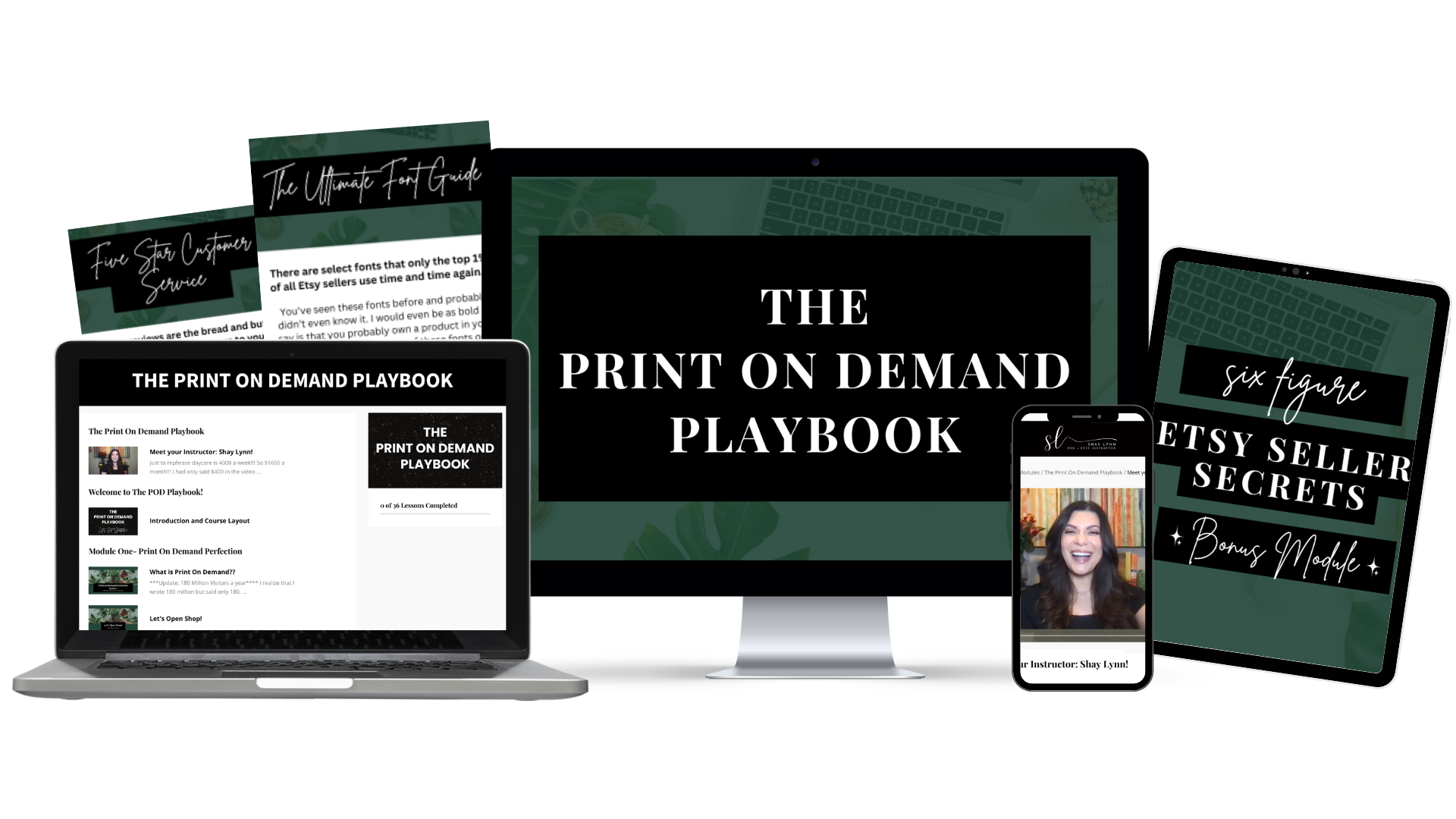
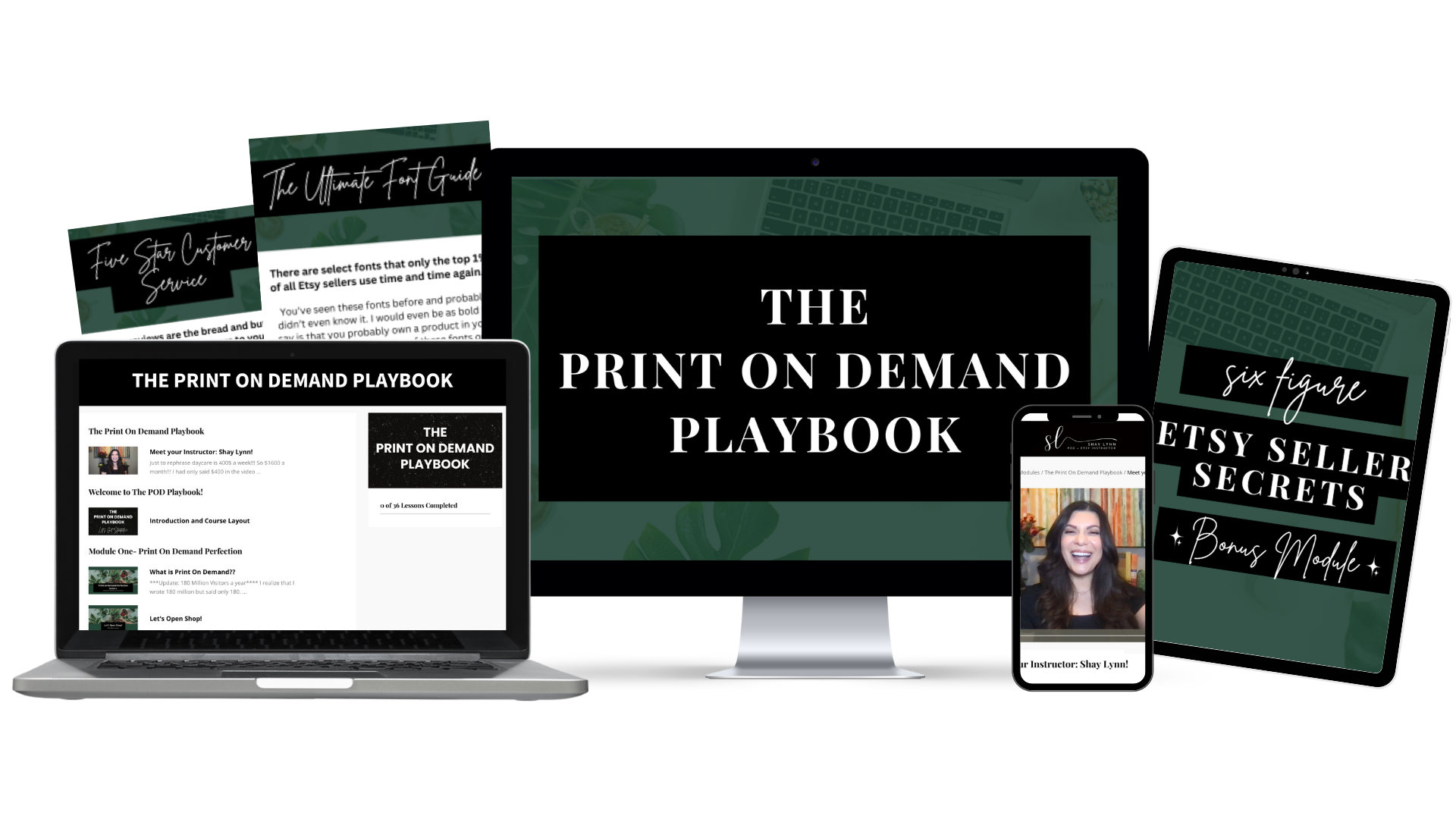
That's exactly what I teach inside The Print on Demand Playbook. It's my complete A-to-Z course with 45+ videos and over 10 hours of step-by-step training, walking you through the exact process I've used to build my own seven-figure Print on Demand and Etsy business — from shop setup, product research, and validation to design, SEO, pricing, mockups, and launching. Whether you want to sell print-on-demand products, digital products, or both, it gives you the full blueprint so you're never left guessing. And the best part? It's on sale right now. 🙌
Final Thoughts
If there's one thing I hope you take away from this blog, it's this: starting an Etsy shop is super fun and definitely exciting, but the Etsy sellers who succeed are the ones who set up their business intentionally from day one.
Get a separate email. Keep your money organized (no LLC required, sole proprietor is a totally valid place to start). Prep your listing assets before you publish. Name your shop with SEO and your future brand in mind. And whatever you do, don't just copy the crowd… go find the opportunities everyone else is overlooking.
Do these five things before you open your shop, and you'll be starting from a place of strategy instead of scrambling to fix things later.
You've got this, and I genuinely cannot wait to see what you build. 💕
If you want me to walk you through the entire process — from finding profitable niches and validating products to designing, optimizing your listings, and building a Print on Demand or digital product business that grows year after year — that's exactly what's waiting for you inside The Print on Demand Playbook. Come learn with me. 🥰
– Shay Lynn ❤️
*always perform a trademark search before making designs ;)